Amchitka Island
by Ed Sawicki
Of all the islands in the Aleutian chain, Amchitka probably suffered the most environmental impact. The military installations constructed during WWII left their scars, followed by the atomic tests conducted by the Atomic Energy Commission in the 1960s and 70s.
World War II
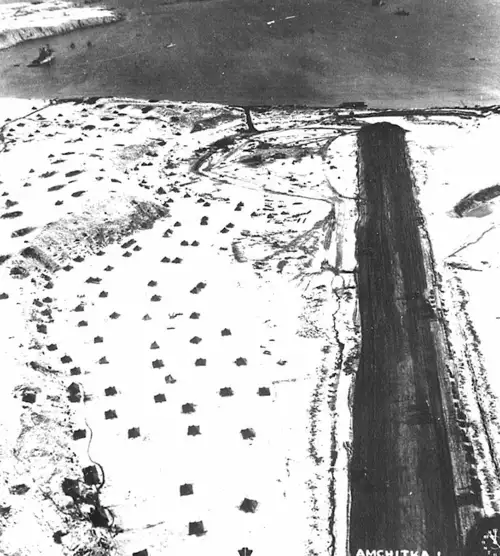
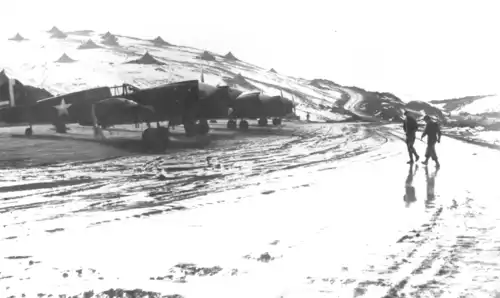
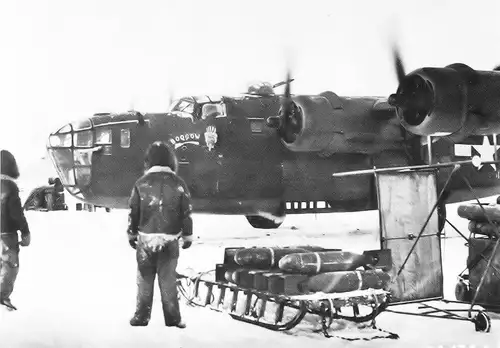
There are three runways on Amchitka named Baker, Charlie, and Fox. Baker was about 6000 feet, Charlie was 5200 feet, and Fox was 5000 feet. Baker was extended to 10,000 feet after the war by the Strategic Air Command (SAC) to accomodate B-29s and MATS aircraft.
Asphalt Plant
Amchitka Island has a network of roads that were built during World War II. A road called Infantry Road ran the length of the island. In support of that roadbuilding, an asphalt plant was built just north of the north-south Charlie runway. The plant used two underground tanks containing about 12,000 gallons of a liquid tar-like substance. The Department of Energy removed the contents of these tanks and filled the tanks with native soil sometime in the 2000s.
White Alice
A White Alice system was installed and operated by the Western Electric Company for the U.S. Air Force from 1959 to 1961. Alice is an acronym for Alaska Integrated Communication and Electronics. It was located approximately one kilomete northwest of the Cannikin site. It was a temporary installation meant as a gap-filler until permanent facilities on other islands were built.
Atomic Energy Commission
The Atomic Energy Commission (AEC)—today, the Department of Energy— occupied Amchitka Island during the period 1967 through 1973 for the purpose of conducting nuclear underground tests. Three tests were conducted named, Cannikin, Long Shot, and Milrow. Long Shot was the first test, detonated in October 1965 at a depth of 2,297 feet below ground surface, with a yield of 80 kilotons (TNT equivalent). The second test, Milrow, was a high-yield (about 1 megaton) weapons calibration test detonated in October 1969 at a depth of 4,003 feet. The third test, Cannikin, was detonated in November 1971 at a depth of 5,873 feet below ground surface, with a yield of less than 5 megatons. Cannikin remains the largest underground nuclear test in U.S. history.
The above map shows “C.P. Bluff” on the northwest portion of the island. This is where the atomic blasts were controlled and monitored. It was staffed by 242 people.
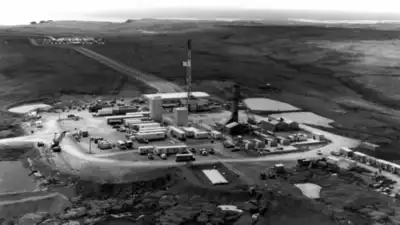
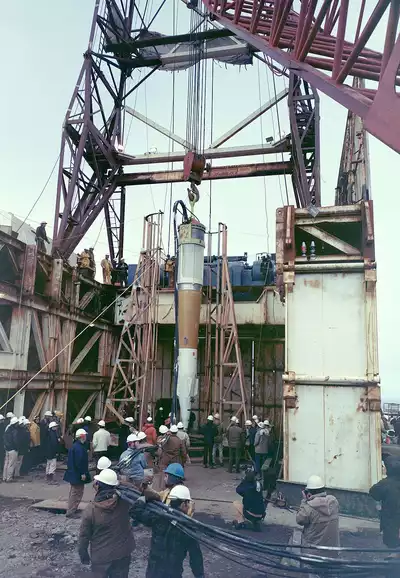
Interestingly, the Greenpeace organization got their start in trying to stop the AEC atomic testing on Amchitka. Although they were unsuccessful in stopping these tests, the publicity they raised likely stopped additional testing.
Sources
Wikipedia: Amchitka Air Force Base
Amchitka Alaska Site Fact Sheet
Wikipedia: White Alice Communications System (Note that Wikipedia does not mention the White Alice system on Amchitka)
OSTI: Archaelogical Site Survey Records of Amchitka Island